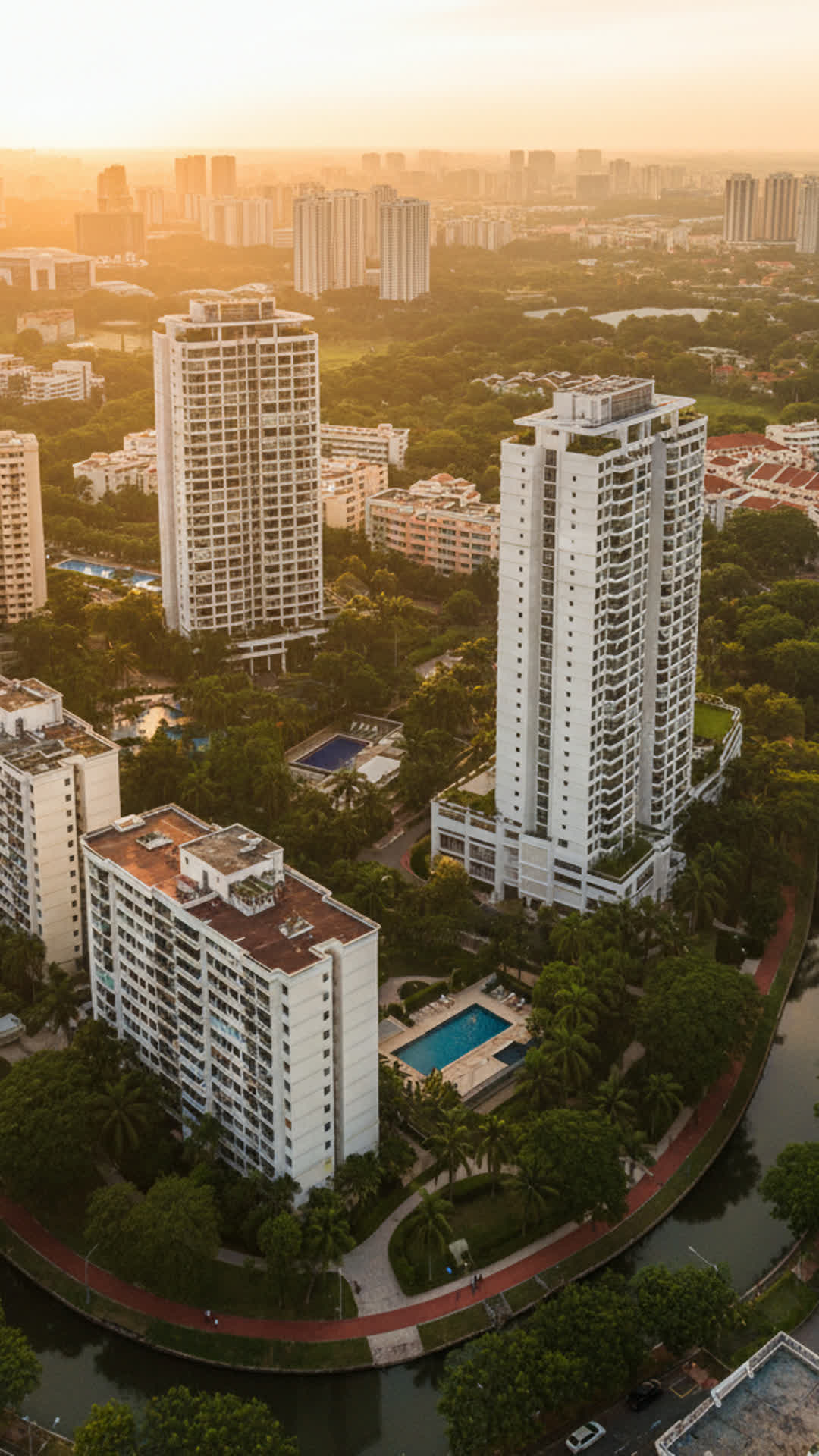
Five years ago, this whole patch of Lentor was jungle. Nothing was there.
Today there's a mall. An MRT station. Seven condominiums, either finished or going up. The same stretch of land that looked like nothing now looks like a neighbourhood.
Most buyers look at a place like this and feel the risk. It's half-built. The trees are still coming down on the next plot over. The roads aren't all there yet. Surely it's safer to buy somewhere already finished?
Here is the part most people miss. When you buy a new launch in a half-built area, you are not really buying a condo. You are buying the government's plan to finish the whole town. And that plan is not a guess — it's drawn, funded, and public.
You're Not Buying a Condo. You're Buying a Town.
Think about what actually makes a condo go up in value over time. It is rarely the building itself. Concrete and glass age. What lifts a home is everything around it — the train line that opens, the mall that fills up, the schools that move in, the park that turns a row of blocks into a place people want to live.
In a finished town, all of that is already in the price. You pay for the certainty because you can see it with your own eyes.
In a half-built town, that future hasn't been priced in yet — but it has been promised. And in 13 years of doing this, I have never once seen the government start a town and walk away. They always finish. The mall gets built. The MRT opens. The park gets planted. The question is never really whether the town gets finished. It's whether you bought in before everyone else could see it was going to.
The Plan Is Already Drawn
This is the part that surprises people: you don't have to trust me, and you don't have to trust the developer's brochure. The plan is public.
For Lentor, it's all there. Eleven plots of land. About 5,000 homes when the whole thing is complete. A large park sitting right in the middle, connecting every one of them. It is funded. It is happening. Some of it is already standing.
When a plan like that is on paper and the early pieces are already built — the mall trading, the train running, the first condo finished and lived in — the uncertainty that normally comes with a new area has mostly been removed. You are no longer betting on whether the town happens. You're choosing where in the sequence you want to step in.
| What | Five years ago | Today |
|---|---|---|
| The land | Jungle | A named town with a drawn master plan |
| The mall | None | Open and trading |
| The MRT | None | Running |
| Condos | Zero | Seven, finished or going up |
| The park | Forest | Planned, central, connecting all 11 plots |
The Proof Is Already Happening Next Door
If reading a master plan still feels abstract, you don't have to imagine how this ends. You can watch it happening in real time, a few stops away, at Tampines North.
Tampines North is being built right in front of us — the same idea, a planned extension of an existing town. The people who bought the early HDB flats there, at projects like Greenweave and Greenridge, got in while it still looked unfinished. Today those same flats are changing hands for around $300,000 more than the owners paid.
That is not a special case. It is what tends to happen when a planned town fills in around homes that were bought early. Lentor is simply the earlier version of the same story — a few chapters behind, with the same plan already on the table.
“The town getting finished was never the question. The only question was whether you bought before everyone could see it would.”
— Elfi Abdullah
Where Lentor Gardens Sits — And Why the Price Matters
So where does a project like Lentor Gardens fit into all of this? It's one of the last plots in the sequence.
That position is unusual, because it gives you two things that normally don't come together. First, the certainty: by the time the last plots launch, the town is already proven. The mall is open. The MRT is running. The first condo is done and lived in. There is very little left to imagine.
Second — and this is the part that doesn't usually survive — the land here came in the cheapest of the whole lot, at around $920 per square foot. Normally, the more certain a place becomes, the more you pay for it. Here, the most certain plot also sat on the lowest land cost. That means you get all the certainty of a finished town without paying the premium that certainty usually carries.
That combination — late in the sequence, lowest land cost — is the whole point. You are not paying extra to remove the risk. The risk was already removed by everything built before you.
How to Buy the Blueprint
Here is the actual move — and you can do the first part yourself, today, for free.
Don't look at the condo first. Look at the town.
Pull up the URA master plan. It is public, it is online, and anyone can read it. Find the area you're considering and count the empty plots around it. Every empty plot is a future neighbour — and that neighbour is going to pay more than you, because they're buying later, into a town that's more finished than the one you're looking at now.
Then check the sequence. Is the mall open or just promised? Is the train running or still a line on a map? Is the first condo lived in, or still a showflat? The further along the town already is, the less you're betting and the more you're simply buying.
When you read a new launch this way — town first, condo second — a half-built area stops looking like a gamble. You can see exactly what is coming, who's funding it, and where the price sits relative to everyone who will arrive after you.
You are not early and risky. You are early and right.
People walk into a half-built area and feel the risk. I read the master plan and feel the opposite. The plan is drawn, it's funded, and the early pieces are already standing. The only real variable left is the price you pay to get in — and the last plots, on the cheapest land, in a town that's already proven, are where that maths works hardest in your favour. Don't buy the condo. Buy the blueprint.Elfi Abdullah · Founder, EastCondos.sg
- Is it risky to buy a new launch in a half-built area like Lentor?
- Less than it looks. The town's master plan is public and funded — 11 plots, about 5,000 homes, and a central park connecting them. The mall is already open, the MRT is running, and the first condo is finished and lived in. You're not betting on whether the town gets built; you're choosing where in the sequence to step in.
- What is the URA Master Plan and how do I use it to buy property?
- The URA Master Plan is Singapore's free, public land-use blueprint. Pull it up online, find the area you're considering, and count the empty plots around it. Each empty plot is a future neighbour who will likely pay more than you, because they buy later into a more finished town. Read the town first, then the condo.
- Why does Lentor Gardens' land price of $920 psf matter?
- It came in as the cheapest plot of the entire Lentor parcel — yet it sits late in the build sequence, when the town is already proven. Normally, the more certain a location becomes, the more you pay for it. Here, the most certain plot also carried the lowest land cost, so you get the certainty without the usual premium.
- Does buying early in a new town actually pay off?
- It has, repeatedly. At Tampines North, early HDB buyers at projects like Greenweave and Greenridge are now selling for around $300,000 more than they paid. Lentor is the earlier version of the same planned-town story.
- Should I look at the condo or the location first?
- The location — specifically the master plan. The building itself ages; the town around it is what lifts value over time. Buy the blueprint: confirm the plan is drawn and funded, check how much of it is already built, then judge the individual condo.
If you're weighing a new launch in a developing area and want to know whether the master plan, the sequence, and the entry price actually line up in your favour, a 7-Min Discovery Call is where we read the blueprint together — with the specific project, the real numbers, and an honest view of where you'd be in the sequence.
Request a 7-Min Discovery Call →