There are two markets most buyers know about.
The first is the new launch — the showflat, the developer's brochures, the floor plans that don't yet exist in concrete. Everything is fresh, nothing has been lived in, and you pay a premium for the story of what it will become.
The second is the resale market — the unit that's already built, already occupied, already showing its age. Priced by what the seller needs to get out.
There is a third market. Most buyers don't know it exists. It sits between those two, and it has a very specific characteristic: the price was set two or three years ago, when the project first launched. You are buying at yesterday's price, on a flat that is much closer to being real today.
This is the Earlier Phase Play. There are two doors in. Both of them open into the same room — a price that no longer appears on any developer's sales board.
The Third Market Nobody Teaches You
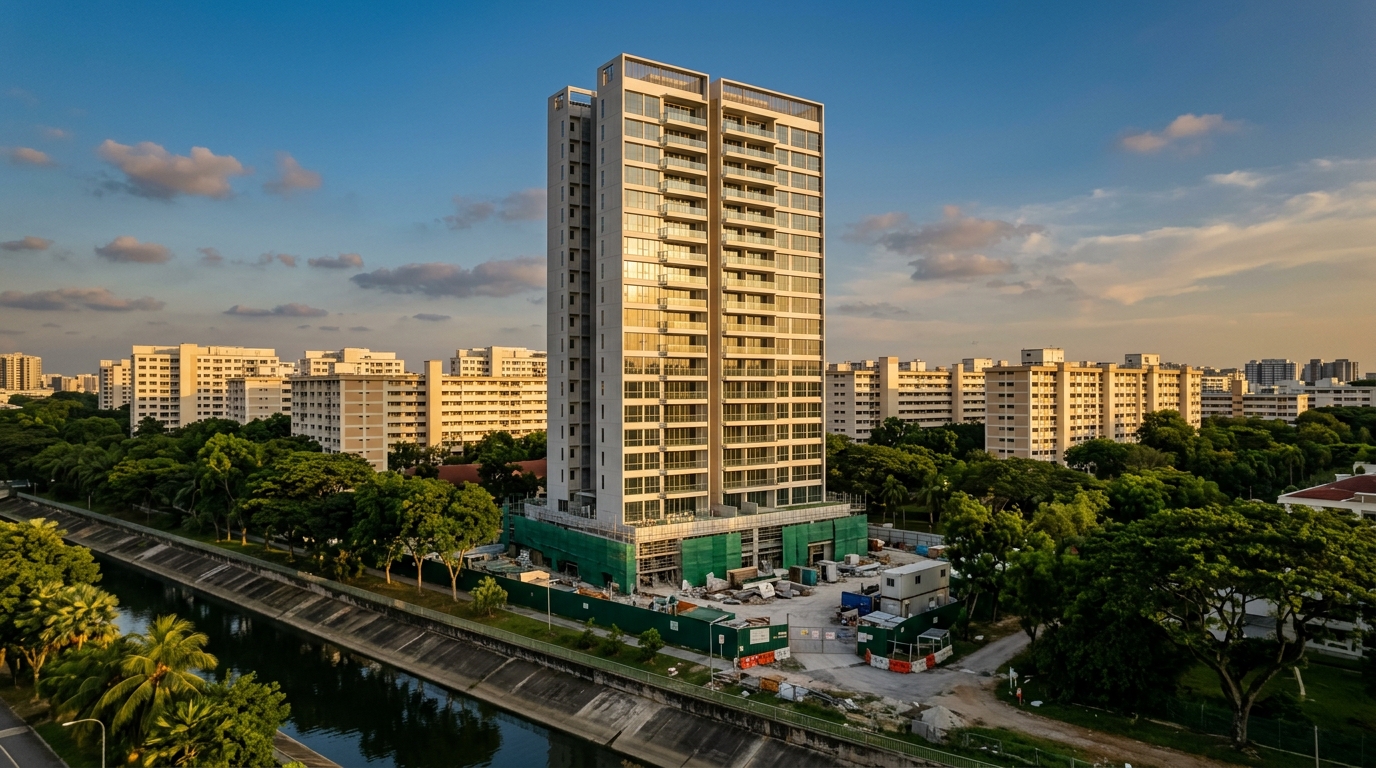
When a new launch sells in 2021 or 2022, the developer collects their bookings, the agents collect their commissions, and the showflat eventually closes. But the building takes another three to four years to complete. The keys don't come until 2024 or 2025.
During those years, things change for some of the original buyers. A job move to another country. A financial situation that shifted. A family that grew faster than expected. Or simply — a better deal appeared elsewhere. Whatever the reason, some original buyers decide they need to exit before the building is finished. Before Temporary Occupation Permit, or TOP.
This is called a subsale. You are not buying from a developer. You are buying from the original purchaser, directly, before the building is completed. You're buying a floor plan and a legal right to the unit — but one that is two or three years closer to delivery than when it was first sold.
Crucially: that original buyer paid Phase 1 pricing. Developers release their cheapest units first to generate momentum and get the project off the ground. You might be stepping into a unit at that same Phase 1 price — sometimes even below the current market value of similar completed units nearby.
This is the third market. It is documented, it is legal, and in District 18 specifically, it has been one of the most consistent plays in Singapore property for the past three years.
Door One — The Subsale Market
Let's look at the numbers rather than the theory.
In 2024, there were 212 subsale transactions in District 18 — the East Singapore district covering Tampines, Pasir Ris, and parts of Bedok. Of those 212 sellers, 206 made money. That is a 97% win rate. The average gain per seller was approximately $270,000 above their original purchase price.
This is not a cherry-picked story. This is the full transaction record for one district, for one year. The pattern is consistent because of when those units were bought — predominantly during the 2019 to 2022 window, before Singapore's property market ran up sharply. The gap between what those buyers paid then and what the market will bear today is real and measurable.
For a buyer entering the subsale market now, this is the opportunity. The seller needs to exit. Their gain becomes your entry price — still anchored to Phase 1 or Phase 2 developer pricing from two to four years ago, not at the $2,640 PSF average you'd pay walking into a new showflat today.
The unit is not completed yet. That is the trade-off. You are buying into a development that has months to go before TOP, which means you need to plan your financing, your current home exit, and your timeline carefully. But the entry price — and the equity position you start with — reflects a market that no longer exists on any sales board.
| Metric | Figure | What It Means |
|---|---|---|
| Total subsale transactions | 212 | Tampines, Pasir Ris, Bedok East |
| Profitable exits | 206 of 212 | Sellers who sold above their developer price |
| Win rate | 97% | Share of transactions that recorded a gain |
| Average seller gain | ~$270,000 | Profit above original purchase price |
| Your entry price | Phase 1 anchor | You buy at prices set before today's market |
Why Sellers Exit — And Why That Creates Your Opening
A natural question: if the unit is worth $270,000 more than they paid for it, why would someone sell before the keys arrive?
There's a tax called Seller's Stamp Duty, or SSD. If you sell a property within three years of purchasing it, you pay a percentage of the sale price back to the government. The schedule is straightforward: sell in the first year after purchase, pay 12%. In the second year, 8%. In the third year, 4%. After three full years have passed — zero.
For someone who bought in 2021 and we're now in 2025, four years have passed. SSD has expired. They can sell without any penalty. Some of these buyers made their money and now want to take it — either to fund another purchase, to simplify their finances, or because life moved in a different direction. Others are simply tired of waiting for keys that are still months away.
When SSD expires on a wave of 2021 and 2022 purchases, subsale supply tends to rise. More sellers entering at the same time creates more options for buyers — and in some cases, puts mild downward pressure on subsale premiums, meaning your entry price can be even more favourable.
You are not buying a distressed sale. You are not taking advantage of someone in trouble. You are buying from someone who made a substantial gain and is choosing to realise it now rather than wait another few months. Their rational decision creates a rational opportunity for you.
“The Phase 1 buyer got in early. You're getting in at their price, on a building that's nearly finished.”
— Elfi Abdullah
Door Two — The Developer Who Has Stopped Advertising
Not every original buyer becomes a subsale seller. Some hold their units through to completion. Some projects sell out entirely at launch and leave no unsold inventory at all.
But many developments don't sell out. Developers typically release units in tranches — Phase 1 at the best pricing to seed the project, Phase 2 at a slightly higher price once there is momentum, Phase 3 higher again as the project approaches completion. If the developer cannot sell every unit before the marketing cycle ends, the remaining stock sits on their books, still priced, still listed, but no longer actively pushed.
Here is what happens to that quiet inventory: the event tents have come down, the ads have stopped running, the agency marketing budget is exhausted, and the showflat is either closed or rarely staffed. The developer's attention has moved on to the next project.
This is where Door Two opens.
A developer carrying unsold units after the active marketing phase is not in distress — they can wait — but they are in a different frame of mind than they were at launch when buyers were queuing. They are now calculating carrying costs, managing cashflow from other projects, and thinking about their balance sheet. The psychology of the negotiation has shifted.
Approaching a developer at this stage — with a complete offer, a pre-approved buyer, a clean timeline, no unnecessary conditions — removes their uncertainty. Developers price for risk. If you eliminate the risk of a deal falling through, you give them a reason to move on price. This does not mean walking in and demanding a discount. It means structuring your offer in a way that makes your certainty worth something to them.
What a Post-Marketing Offer Looks Like
The mechanics of Door Two are less about negotiation tactics and more about preparation. A developer does not move on price because you asked nicely. They move because you give them something more valuable than their asking price: a clean deal that closes on schedule.
That means arriving pre-approved for your financing. It means having your HDB exit timeline sorted — either already sold, or on a clear path to sale before the completion date. It means making one offer with a short decision window rather than a drawn-out back-and-forth.
In practical terms, the units most available through Door Two tend to be the ones that were harder to sell at launch — less favourable orientation, lower floors, larger formats that require more firepower financially. These are not bad units. They are simply units that did not sell on marketing momentum alone, and that lack of demand at launch has left them priced closer to where they started.
The Earlier Phase Play — Putting Both Doors Together
These are not separate tactics. They are two doors into the same position: buying into a completed or near-complete project at a price point that no longer exists for buyers walking in off the street.
The Earlier Phase Play is the recognition that every new launch has multiple chapters. Chapter 1 happens at the showflat, with the full marketing machine running, at the highest pricing the developer can achieve. Chapter 2 happens two to four years later — in the subsale market, or through the developer's quiet inventory list. Most buyers only ever see Chapter 1. The buyers who ended up with a better entry price found their way into Chapter 2.
For HDB upgraders who feel priced out of new launches today, this is not a consolation prize and it is not a compromise. The District 18 data shows that buying into a well-located project at Phase 1 pricing — even as a late buyer entering through a subsale — has produced consistent, documented gains. Not because the market always rises, but because the entry price is the single most controllable variable in any property decision.
You cannot control what the market does next. You can control what you pay to get in.
The two markets most buyers know — new launch and resale — are both priced at today's market. The Earlier Phase Play puts you into yesterday's pricing, in a building that is nearly ready to hand over keys. That gap is real. And it will not be available forever — once the keys are handed out and the units complete, the pricing resets to market.
Most buyers think they missed the boat when they see new launch prices. They haven't. The Phase 1 pricing is still accessible — it's just in a different chapter. The subsale market and the developer's unsold inventory are where that chapter lives. The data in D18 is not subtle: 97% of subsale sellers made money in 2024. You don't need to be first. You need to know which door to walk through.Elfi Abdullah · Founder, EastCondos.sg
If you're an HDB upgrader wondering whether new launch pricing has left you behind, a 7-Min Discovery Call is where we look at whether Door One or Door Two applies to your situation — with specific projects, real numbers, and a clear picture of what your entry price would actually look like.
Request a 7-Min Discovery Call →