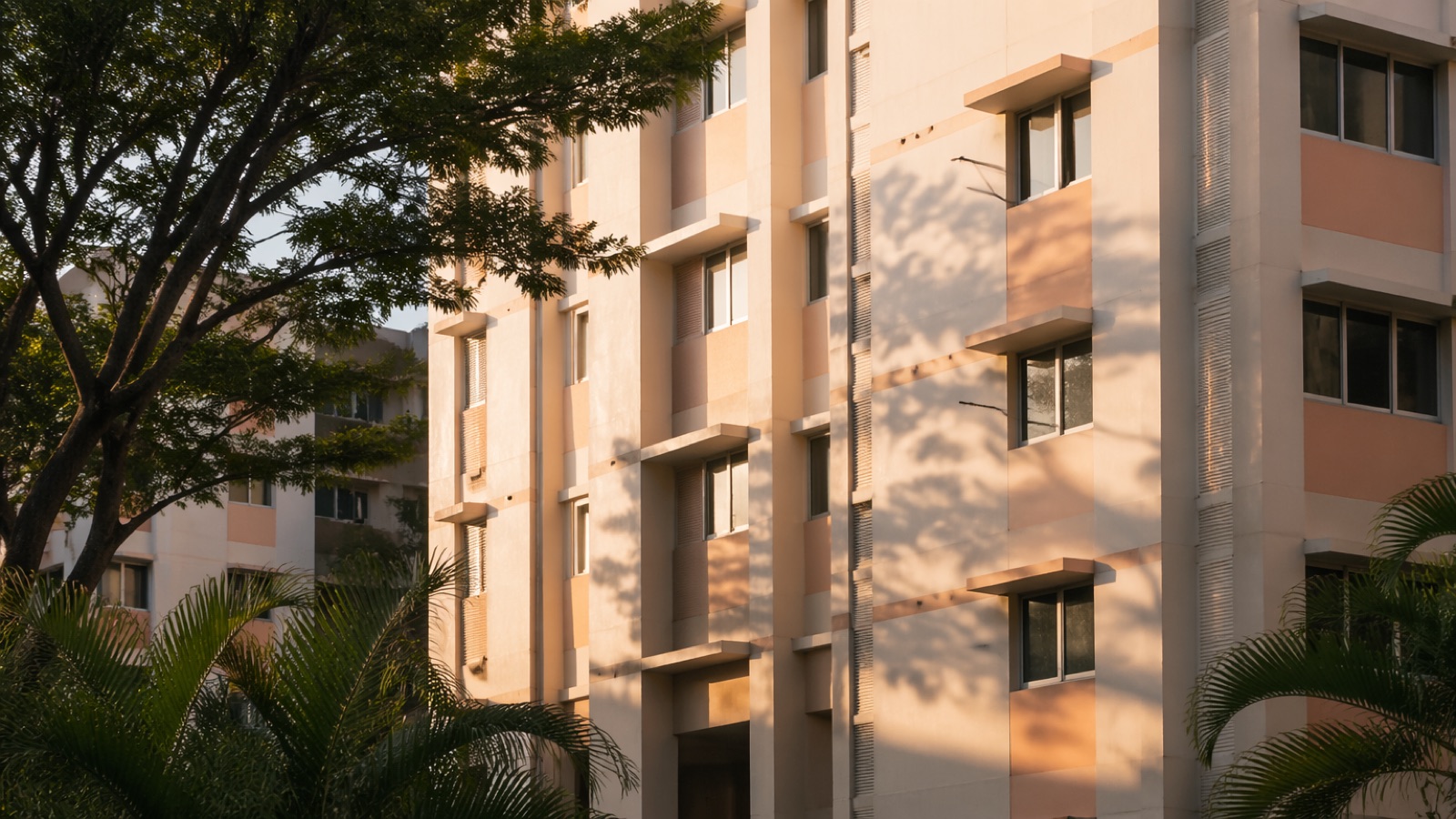
Your HDB has a lot of botox.
If you walked through your block today, you probably wouldn't think it's 30 years old. The paint is fresh. The lift works. The void deck is clean. HDB maintains its buildings so well that most owners genuinely forget the age of the flat they're sitting in.
But the 99-year clock doesn't care about fresh paint. And the price your flat is worth today — that's also young on the outside, old on the inside.
This article is for HDB upgraders sitting on a flat they bought 20-25 years ago, now in their mid-30s to early 40s, watching the market and wondering whether to move. Here's the honest data — what the COVID premium actually was, why it's fading now, and the window most people don't realize they're still inside.
What COVID Did to Your HDB Price
Between 2020 and 2023, HDB resale prices in Singapore climbed approximately 30%. That wasn't organic demand. That was a supply shock.
During the pandemic, BTO construction delayed by 12-18 months. New flats didn't enter the market on schedule. At the same time, more families wanted their own space — couples accelerating BTO plans, parents separating from multi-gen households, remote work making home-size decisions urgent. Demand surged. Supply collapsed. Prices exploded.
This is the textbook definition of a Black Swan — a one-time, unpredictable event that distorts prices outside the normal range. Supply shocks aren't market trends. They're luck.
And the gift from that luck is now sitting inside your flat's valuation.
If you bought your HDB in 2000 for $300,000, and today it's worth $700,000, a meaningful portion of that gain came from 2020-2023. Strip out the Black Swan period, and the trajectory looks very different.
The question is: what happens when the Black Swan passes?
The Triple Whammy Is Already Here
Here's where it stops being a prediction and starts being visible in HDB's own data.
The first drop in seven years.
In Q1 2026, HDB's Resale Price Index dropped 0.1% quarter-on-quarter. It's a small number. But it's the first decline since Q2 2019 — seven years of uninterrupted climb, now reversing.
And if you dig one level deeper, the story gets worse for most upgraders. 4-room flats — which make up 45% of all resale volume — fell 0.7% in the same quarter. The segment most upgraders sit in is falling seven times faster than the headline.
The index looks soft. The 4-room segment is already weak.
The million-dollar flats mask the truth.
A small slice of the market — roughly 7% of volume — is still setting records. 145 flats sold for over $1 million in March 2026 alone. Sounds strong, right?
Here's the catch: 90% of those million-dollar flats are concentrated in three mature estates — Toa Payoh, Bukit Merah, Queenstown. Not in East Singapore. Not in Bedok, Tampines, Pasir Ris, or Eunos.
The top of the market is propping up the index. The rest is softening. If you're an East upgrader reading the headline RPI, you're reading the wrong number.
The BTO flood.
On top of the softening prices, a wave of supply is coming back. Many of those flats are in your area. When your neighbour's BTO clears MOP and hits the resale market, they're either your competitor (if you're selling) or your buyer's alternative (if you're sitting tight).
Plus lease decay, happening quietly.
If your flat is 30-35 years old, you have 64-69 years left on a 99-year lease. You're not at the bank-financing-risk threshold yet (that's around 60 years remaining), but you're on a one-way clock. Every year you wait, your buyer's bank gives them a smaller loan — which pushes your asking price down.
Three forces at once. More supply. Softening prices in your exact segment. Lease decay tightening the screw.
This is the real age catching up with the painted face.
The Younger-Borrower Play

Most HDB upgrader content stops at the bad news and leaves you with "good luck." That's not useful. Let me show you the move most of my clients use to act inside their window, even when the bank math looks tight at first glance.
In my playbook, I call it The Younger-Borrower Play. It combines a bank-offered loan structure with a CPF optimization move that most upgraders don't know is available to them.
Here's how it works.
In Singapore, a home loan's maximum tenor is capped at the older borrower's age. The standard rule is: loan tenor ends at age 65, or 30 years maximum, whichever is shorter. If you apply for the loan jointly with your spouse, the bank takes the age of the older borrower and caps the tenor accordingly.
So if you're 45 and your spouse is 35, a joint application still gets you only a 20-year tenor (because the bank anchors to your age, 45, and 65 minus 45 is 20). That means high monthly installments that can easily crush the deal.
“Your younger spouse applies for the loan alone — as sole borrower. You, the older spouse, don't go on the loan at all.”
Instead, you co-own the condo by using your CPF for the down payment and being named on the title deed.
Because the bank sees only the younger borrower on the loan, it calculates the tenor against her age alone. A 35-year-old spouse secures a 30-year loan. The condo is held jointly — both names on the title — but the loan structure belongs to one person.
The result: a 45-year-old pays the monthly installment of a 30-year-old.
Same property. Same price. Same couple. Just a different loan structure that most upgraders don't realize is available to them.
This isn't a loophole. It's standard bank practice in Singapore. The reason most upgraders don't use it is they apply jointly by default — and never ask about the alternative.
The 45-Year Line
The window isn't arbitrary. It's a function of how bank loans actually work.
Here's what the monthly looks like on a $1.5M condo loan at 1.5% interest, 75% LTV, across different age and structure scenarios:
| Your age | Structure | Max tenor | Monthly |
|---|---|---|---|
| 30 | Solo | 30 years | ~$5,176 |
| 35 | Solo | 30 years | ~$5,176 |
| 40 | Solo | 25 years | ~$5,996 |
| 45 | Solo | 20 years | $7,222 |
| 45 | Younger-Borrower Play (35yr spouse) | 30 years | $5,176 |
| 50 | Solo | 15 years | ~$9,288 |
| 55 | Solo | 10 years | ~$13,472 |
The pattern is clear. Up to age 45, The Younger-Borrower Play can pull your monthly back down to a 30-year-equivalent. Past 45, the math changes quickly. By 50, you're looking at 15-year tenors solo, which nearly doubles the monthly compared to a 30-year structure.
The premium was luck. The Younger-Borrower Play window is a function of age.
One caveat: the play depends on your younger spouse being under 35 at application. If your spouse is 40 and you're 45, the play still helps but less dramatically — the tenor would anchor to 25 years instead of 30. The bigger the age gap between spouses, the more runway the play gives you.
The Playbook — This Month
If you recognize yourself in this article — flat is 30+ years old, you're under 45, you've been watching the market — here's what to do in the next 30 days.
Step 1: Pull your lease.
Log into HDB's My HDBPage and note your remaining lease years. If you're under 65 years remaining, lease decay is starting to influence your buyer's financing. Track this number — it matters for pricing strategy.
Step 2: Check your current valuation.
Use HDB's Check Resale Flat Prices tool. Don't look at asking prices — look at actual transacted prices in the last 6 months for your block and flat type.
Step 3: Compare to the Q4 2025 peak.
Q4 2025 was the top — the last quarter before the RPI turned. Estimate where your flat sat at that peak. If it's now 5-10% below, you're already living with an unrealized correction. That's the botox wearing off.
Step 4: Run The Younger-Borrower Play math.
Talk to a bank, a broker, or a property advisor about what your monthly would look like with your younger spouse as sole borrower. Compare it to a joint application — the gap is often significant. Then compare to staying in the HDB. Include the opportunity cost of the HDB premium continuing to fade.
Step 5: Stack the timeline.
A parallel sell-HDB-buy-condo transaction has its own timing rules. Start with the end state — when do you want to move in? Work backwards to when the OTP needs to be exercised, when the HDB needs to be sold, when the loan needs to be approved.
The goal isn't to rush. The goal is to move with a map.
The Pattern
In 13 years watching East Singapore, I've worked with over 500 families through the upgrade decision.
One pattern has held across almost every one of them.
The families who came out ahead weren't the ones who timed the market perfectly. They were the ones who moved while the market was still warm — who made a decision inside their own window of age, financing, and premium, rather than waiting for "the right time."— Elfi Abdullah
The families who regret the most weren't the ones who bought the wrong condo. They were the ones who kept waiting. Waited for another Black Swan. Waited for rates to drop. Waited for their HDB to hit a new record. Waited until their age crossed the line and The Younger-Borrower Play no longer worked.
The premium was luck. The window is yours.
Your HDB looks young. Inside, it's old. The data from Q1 2026 is telling you the real age is starting to show.
If you're 30+ flat, under 45, watching this quietly — the math is screaming at you.
Don't wait for the face to drop.
Common questions about this play
- How much did HDB resale prices climb during COVID?
- Between 2020 and 2023, HDB resale prices in Singapore climbed approximately 30%. The move was driven by a supply shock — BTO construction delayed by 12–18 months while demand surged from remote work and multi-generational separations. The COVID premium is a one-time distortion, not a trend.
- Is the HDB market actually cooling in 2026?
- Yes. In Q1 2026, HDB's Resale Price Index dropped 0.1% quarter-on-quarter — the first decline since Q2 2019. The 4-room segment, which is 45% of all resale volume, fell 0.7% in the same quarter. On top of that, 48,000 flats hit MOP across 2026–2028, adding meaningful resale supply.
- How does The Younger-Borrower Play work?
- In a joint home-loan application in Singapore, the bank anchors the maximum tenor to the older borrower's age (loan ends at 65, capped at 30 years). If the younger spouse applies as sole borrower instead, the tenor is calculated against her age alone. The couple still co-owns the condo via CPF and title deed, but the loan structure belongs to one person — which can pull the monthly back down to a 30-year-equivalent even when the older spouse is 45.
- Why does the window close around age 45?
- Bank loan tenors in Singapore are capped at age 65 or 30 years, whichever is shorter. Up to age 45, The Younger-Borrower Play can still produce a 30-year tenor via a younger spouse. Past 45, even with the play the math tightens — at 50 you're looking at roughly 15-year solo tenors, which nearly doubles the monthly versus a 30-year structure. The window is a function of age, not market timing.
- My HDB was just repainted — how old is it really?
- HDB maintains its buildings meticulously, which is why most owners forget their flat's actual age. Check your remaining lease via HDB's My HDBPage. If you have 64–69 years left on a 99-year lease, your flat is 30–35 years old — and every year the remaining lease shrinks, the bank loan your buyer can secure gets smaller, which pushes your asking price down.
If you'd like to see The Younger-Borrower Play applied to your specific numbers, request a 7-Min Discovery Call. No pitch, no pressure — I'll show you what your actual monthly would look like under both structures, and whether the window works for your household.
Request a 7-Min Discovery Call →